
She Asked Me... "What Does Gluten-Free Even Mean?"
A simple, heartfelt conversation at my local market reminded me how many people are still curious about what “gluten-free” really means — and why it matters. Here’s how I explained it, in the most down-to-earth way possible.
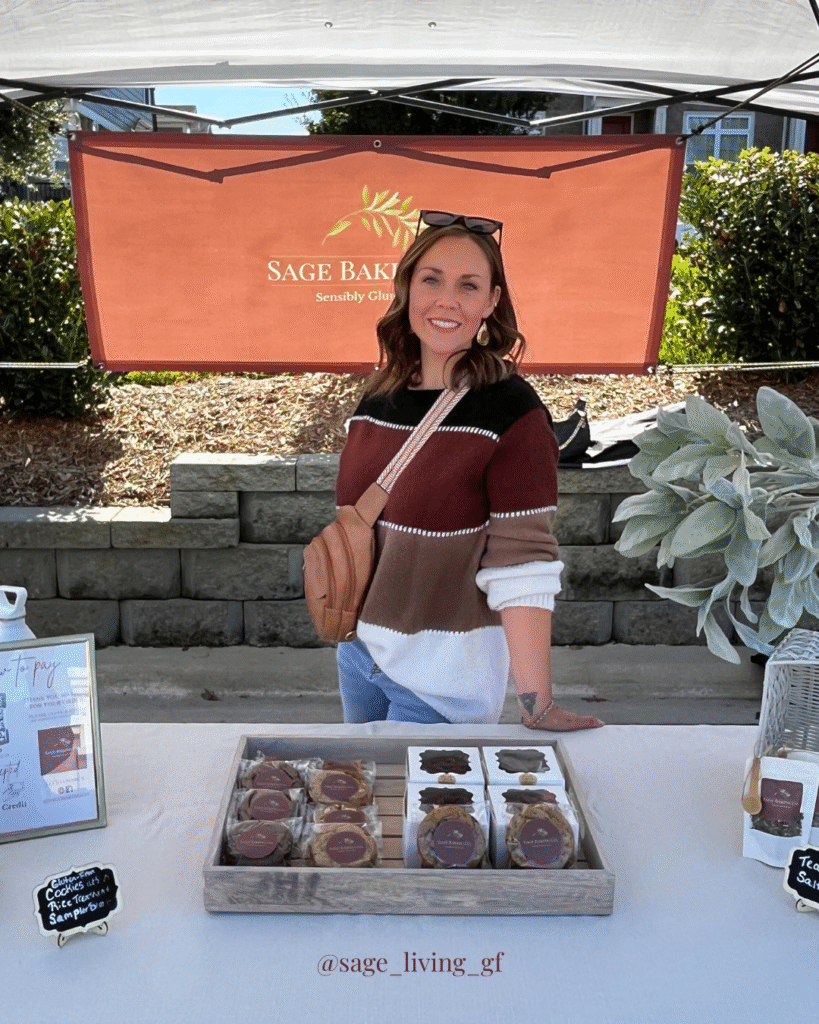
Yesterday at my local market, someone stopped by my Sage Baking Co. table and asked, “What does gluten-free actually mean?”
It’s a question I’ve heard many times, and honestly, I love when people ask it. Because for so many, gluten-free eating still feels like a mystery — a wellness trend to some, a medical necessity to others. But at its core, it’s really about understanding how certain foods interact with our bodies.
So let’s start with the basics.
Gluten is a protein found in wheat, barley, and rye — grains that show up in a lot of everyday foods, from bread and pasta to cereals and sauces. It’s what helps dough stretch and rise, giving bread that soft, chewy texture we all know so well.
For most people, gluten doesn’t cause any issues. But for others, it can have a big impact on health and well-being.
For those with celiac disease, gluten triggers an autoimmune response — meaning the body’s immune system mistakenly attacks the small intestine whenever gluten is eaten. Over time, this can damage the intestinal lining and make it hard to absorb nutrients.
Others may experience gluten sensitivity, intolerance, or wheat allergies, where gluten (or wheat itself) causes inflammation, digestive discomfort, brain fog, or fatigue — but without the autoimmune damage of celiac disease.
That’s why you’re seeing more and more gluten-free baked goods, breads, and pastas in stores and markets — not because it’s a fad, but because many people truly feel better when they avoid gluten.
The beautiful thing is, so many foods are naturally gluten-free. Think of simple, nourishing staples: fresh fruits and vegetables, meats, fish, eggs, rice, potatoes, beans, nuts, and seeds. These foods form the foundation of a gluten-free diet and can make eating this way both wholesome and satisfying.
Whether you’ve recently gone gluten-free, are supporting a family member who has, or are just curious — learning what gluten is (and where it hides) is a great first step toward more intentional eating.
So next time someone asks, “What does gluten-free even mean?”, you can tell them — and maybe even send them this post.
Because the more we understand our food, the easier it becomes to make choices that support how we want to feel.